
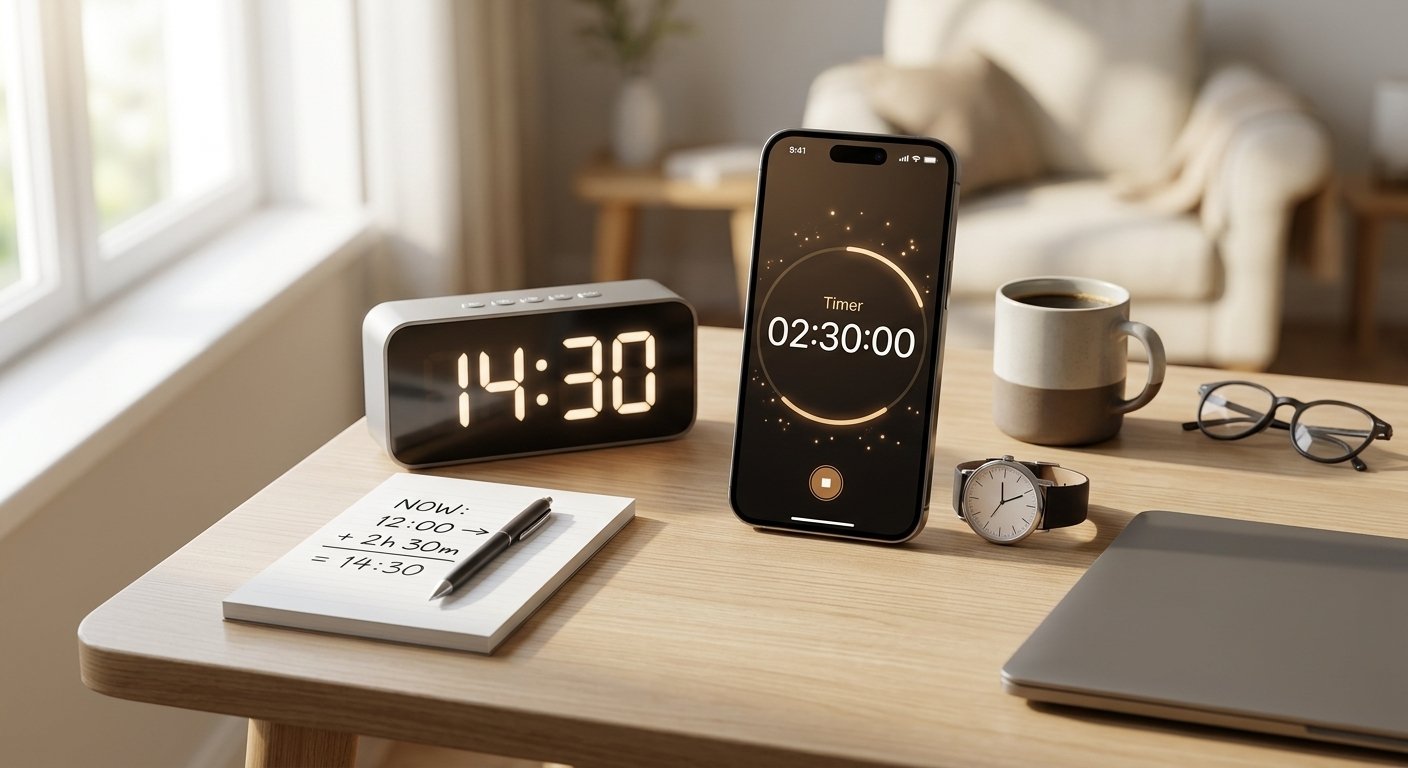
Wondering how long until 2:30 or how to calculate remaining time throughout your daily routine? Whether you ask how long until 7am for an early wake-up call or how long until 12 pm for lunch, calculating time is simple. This comprehensive guide provides step-by-step methods and quick cheat sheets for common clock targets. Managing your daily schedule becomes effortless once you master these basic countdown techniques.
What Does “How Long Until 2:30?” Mean?
The question asks for the exact time interval between right now and 2:30 on the clock. Most people naturally mean 2:30 PM for afternoon appointments, but clocks show 2:30 twice every single day. Knowing how to calculate this time helps you plan work shifts, school pickups, and daily meetings without guesswork. Understanding this basic concept makes overall daily time tracking much smoother.
If you are tracking early morning schedules, you might wonder how long until 7am before starting your commute. Similarly, checking how long until 12 pm helps you stay on track during busy morning work sessions. Knowing these target intervals ensures that you never miss key daily appointments or meal breaks. Planning ahead keeps your workday organized and completely stress-free.
Why Do People Want to Know How Long Until 2:30?
People check the remaining time to manage deadlines, scheduled breaks, and travel plans efficiently. Knowing the exact interval prevents arriving late or waiting around unnecessarily during busy routines. Having accurate timing estimates helps maintain focus and balance throughout your busy workday.
- Work Meetings: Mid-afternoon check-ins often land around 2:30 PM.
- School Pickups: Dismissal times require precise counting down to the minute.
- Shift Changes: Night-shift breaks and morning handoffs rely on accurate time tracking.
- Daily Meals: Checking how long until 12:15 helps manage lunch schedules accurately.
Understanding 2:30 in 12-Hour vs. 24-Hour Time Formats
The 12-hour system uses AM and PM designations to divide the day into two equal parts. In contrast, the 24-hour system counts continuously from 00:00 all the way to 23:59. Converting 2:30 PM into 24-hour time gives 14:30, which eliminates all confusion when setting alarms. Understanding both systems helps you calculate accurate time intervals across various digital devices.
| 12-Hour Format | 24-Hour Format | Common Daily Use |
| 2:30 AM | 02:30 | Early morning flights & night shifts |
| 12:00 PM | 12:00 | Midday lunch hour |
| 12:15 PM | 12:15 | Midday break time |
| 2:30 PM | 14:30 | Afternoon meetings & appointments |
How Long Until 2:30 PM?
Calculating the interval until 2:30 PM depends entirely on your current local clock time. Subtracting your starting hour from 14:30 gives the exact remaining hours and minutes for your schedule. Midday timing often involves specific intervals that help organize your remaining afternoon tasks. Keeping track of these afternoon hours ensures a balanced and productive daily workflow.
Midday timing often involves specific intervals that help keep your schedule on track. For instance, knowing how long until 12:15 gives you a clear window before noon tasks begin. Tracking this specific time allows you to prepare for upcoming lunch breaks or afternoon meetings. Small timing checks throughout the day prevent unexpected schedule conflicts.
How Long Until 2:30 AM?
The time of 2:30 AM marks a late-night or early-morning milestone for shift workers and travelers. Crossing midnight is where manual time calculations often get tricky for most people. To find the remaining time, count the hours remaining until midnight and then add 2 hours and 30 minutes. This two-step method ensures accurate results without causing mental math confusion.
Morning vs. Afternoon Countdowns
Morning countdowns cover long hours stretching toward the afternoon and early evening hours. In contrast, afternoon countdowns deal with short, urgent minutes before end-of-day work deadlines. Understanding the difference helps you allocate your time and energy effectively throughout the day. Balancing these timing perspectives creates a smooth transition between morning and afternoon duties.
As the afternoon progresses, you may ask how long until 2:55 pm right before school dismissal. Shortly after, checking how long until 3pm helps wrap up end-of-day work tasks efficiently. Monitoring these close time targets keeps your end-of-day activities running on schedule. Keeping an eye on the clock prevents last-minute rushing at the end of your shift.
How to Calculate How Long Until 2:30 (Step-by-Step)
Manual time calculation is fast once you break it down into simple, manageable steps. You do not need a digital calculator to get an exact duration for your target time. Following a structured approach helps you calculate remaining hours and minutes mentally in seconds. Practice makes these quick time math calculations second nature during your daily routine.
Step 1: Check the Current Time
- Look at a reliable clock or mobile phone to verify the current hour and minute.
- Note whether your current local time is AM or PM before subtracting.
- Ensure your device clock shows exact seconds if maximum precision is required.
Step 2: Identify the Correct 2:30 (AM vs PM)
- Before 2:30 AM, calculate toward today’s early morning target.
- Between 2:30 AM and 2:30 PM, count toward today’s afternoon target.
- After 2:30 PM, set your target to tomorrow’s 2:30 AM or 2:30 PM.
Step 3: Subtract the Current Time Using the Two-Jump Method
- Jump 1: Count the minutes needed to reach the next full hour.
- Jump 2: Count the remaining hours from that full hour to 2:30 PM.
- Combined Total: Add the two results together for your final duration.
Step 4: Check and Adjust the Minutes
- If your current minutes exceed 30, borrow 1 hour (60 minutes).
- Add 60 minutes to your target calculation before subtracting.
- Double-check your mental math to avoid simple 10-minute calculation errors.
Exact Time Until 2:30: The Minute-and-Second Method
When precise seconds matter, subtract from right to left starting with the seconds column. Write your target as 2:30:00 and borrow 1 minute if your current seconds exceed zero. This method gives you exact precision down to the very last tick of the clock. It is particularly useful for event launches, exam countdowns, and live broadcast tracking.
Near the hour mark, tracking exact minutes becomes essential for staying on schedule. For example, checking how long until 2:55 pm tells you if you have time for a quick break. Asking how long until 3pm provides a clean baseline for hourly planning and meeting preparation. Watching these tight time windows keeps your daily transitions perfectly smooth.
How Long Until 2:30 in Hours, Minutes, and Seconds
Expressing time in total minutes or seconds simplifies countdown setups on modern digital devices. Converting hours to minutes requires multiplying by 60 and adding any leftover minutes. This approach provides a single number that is easy to input into timer applications. Total minute counts are especially helpful when setting up study timers or workout blocks.
How Many Minutes Until 2:30?
To find total minutes, calculate hours left multiplied by 60 plus remaining minutes. People frequently ask how many minutes until 2:30 today to set precise alarms or study timers. Knowing how many minutes until 2:30 today helps break down large work blocks into manageable intervals. Converting time into total minutes provides a clear picture of your available working window.
How Many Seconds Until 2:30?
- 1 Minute: 60 Seconds
- 10 Minutes: 600 Seconds
- 30 Minutes: 1,800 Seconds
- 1 Hour: 3,600 Seconds
- 2 Hours 30 Minutes: 9,000 Seconds
Special Scenarios & Time Factors
What Happens When 2:30 Has Already Passed Today?
If 2:30 PM has already passed, your countdown automatically targets 2:30 AM tonight or 2:30 PM tomorrow. You can also calculate elapsed time by subtracting 2:30 PM from your current clock time. Knowing whether you are looking forward or backward keeps your timing calculations accurate. Digital time tools automatically adjust to the next upcoming occurrence of your target time.
Comparing 2:30 PM with Nearby Times
Comparing nearby afternoon times keeps your afternoon schedule organized and well structured. Late afternoon queries like how long until 3:30 help organize post-work activities and evening plans. Similarly, checking how long until 3:35 ensures you do not miss late afternoon buses or appointments. Understanding these small timing differences helps you manage your late afternoon commitments smoothly.
| Target Time | Difference From 2:30 PM | Common Activity |
| 2:30 PM | Target Mark | Afternoon break / Meeting start |
| 3:00 PM | + 30 Minutes | End of school / Late shift start |
| 3:30 PM | + 1 Hour | Afternoon commute / Appointments |
| 3:35 PM | + 1 Hour 5 Minutes | Bus departures / School pickup |
Time Zones Matter: Calculating Across Different Time Zones
- Eastern Time (ET): Reaches 2:30 PM first among major US time zones.
- Central Time (CT): Reaches 2:30 PM exactly 1 hour after Eastern Time.
- Mountain Time (MT): Reaches 2:30 PM exactly 2 hours after Eastern Time.
- Pacific Time (PT): Reaches 2:30 PM exactly 3 hours after Eastern Time.
Example: 2:30 PM Across U.S. Time Zones
When scheduling nationwide meetings, remember that 2:30 PM Eastern Time is 11:30 AM Pacific Time. If a participant in California sets a timer for 2:30 PM local time, they will miss the event entirely. Always verify the host location’s time zone before calculating remaining time for remote events. Checking local offsets prevents miscommunication across remote corporate teams.
Daylight Saving Time (DST) & How It Affects Your Calculation
- Clocks spring forward 1 hour in spring, skipping from 2:00 AM to 3:00 AM.
- On spring DST transition night, 2:30 AM does not exist on the clock.
- Clocks fall back 1 hour in autumn, repeating the hour between 1:00 AM and 2:00 AM.
- Standard same-day afternoon calculations are not affected by nighttime DST shifts.
Tools, Productivity & Best Practices
How Long Until 2:30 Live Countdown & Tracking Tools
Digital time tools eliminate mental math for busy schedules and demanding work environments. Later in the afternoon, asking how long until 3:30 helps manage remaining workday tasks effectively. Checking how long until 3:35 gives an exact buffer before late afternoon deadlines or commutes start. Leveraging these digital solutions keeps your day organized with minimal effort.
- Countdown Timers: Continuously display hours, minutes, and seconds updating live.
- Time-Until Calculators: Turn target clock times into exact remaining durations instantly.
- Phone Alarms: Trigger audible alerts when target times arrive.
- Calendar Reminders: Best suited for scheduled appointments and multi-day events.
Choosing the Right Countdown Tool for Your Needs
| Task Goal | Recommended Tool | Primary Advantage |
| Quick Mental Estimate | Manual Subtraction | No device required |
| Exact Remaining Duration | Time-Until Calculator | Instant accurate result |
| Continuously Updated Display | Live Countdown Timer | Visual progress tracking |
| Arrival Alert at 2:30 PM | Phone Alarm | Guaranteed sound notification |
| Meeting / Appointment | Calendar Reminder | Cross-device synchronization |
Productivity Benefits of Knowing the Exact Time Remaining
Knowing exact remaining intervals improves time management across all your daily activities. It eliminates vague estimations and helps you focus on high-priority tasks with full confidence. Clear countdown targets reduce stress and boost productivity throughout your busy schedule. Having precise time data empowers you to make better decisions about your daily workflow.
Common Mistakes When Calculating Time Until 2:30
Avoid confusing AM with PM, which leads to massive 12-hour calculation errors in your schedule. Always treat minutes as 60-unit blocks rather than standard decimal numbers during mental math. Double-checking your starting time prevents simple subtraction mistakes when crossing full hours. Being mindful of these common traps guarantees accurate time calculations every single time.
- Do: Split calculations at the next full hour for easy mental math.
- Do: Set pre-alarms 10 to 15 minutes before important appointments.
- Don’t: Subtract minutes like regular decimal numbers.
- Don’t: Forget to verify the target event’s time zone.
Quick 2:30 Countdown Cheat Sheet
| Current Time | Time Until 2:30 PM | Time Until 2:30 AM |
| 8:00 AM | 6 Hours 30 Minutes | 18 Hours 30 Minutes |
| 10:00 AM | 4 Hours 30 Minutes | 16 Hours 30 Minutes |
| 12:00 PM | 2 Hours 30 Minutes | 14 Hours 30 Minutes |
| 1:00 PM | 1 Hour 30 Minutes | 13 Hours 30 Minutes |
| 2:00 PM | 30 Minutes | 12 Hours 30 Minutes |
Fun Facts About 2:30
- Dentist Joke: 2:30 is famous worldwide for the classic pun “tooth-hurty.”
- Workplace Energy: Research shows human energy naturally dips around 2:30 PM.
- British English: 2:30 is commonly called “half past two” in English-speaking regions.
FAQs
How many hours until 2:30 PM?
It depends entirely on your current time. For example, if it is currently 10:00 AM, exactly 4 hours and 30 minutes remain until 2:30 PM.
What is 2:30 PM in 24-hour time?
In the 24-hour clock system, 2:30 PM is written as 14:30 (or 1430 in military notation).
What if 2:30 PM has already passed?
If today’s 2:30 PM has already passed, the countdown automatically shifts to 2:30 AM tonight or 2:30 PM tomorrow.
Conclusion
Calculating how long until 2:30 comes down to simple math and clear time zone awareness. Use the two-jump method for quick mental checks or rely on digital countdown tools for continuous tracking. Setting pre-alarms ensures you stay punctual and ahead of schedule every single day. Mastering these simple timing habits guarantees you will never be caught off guard by the clock.