
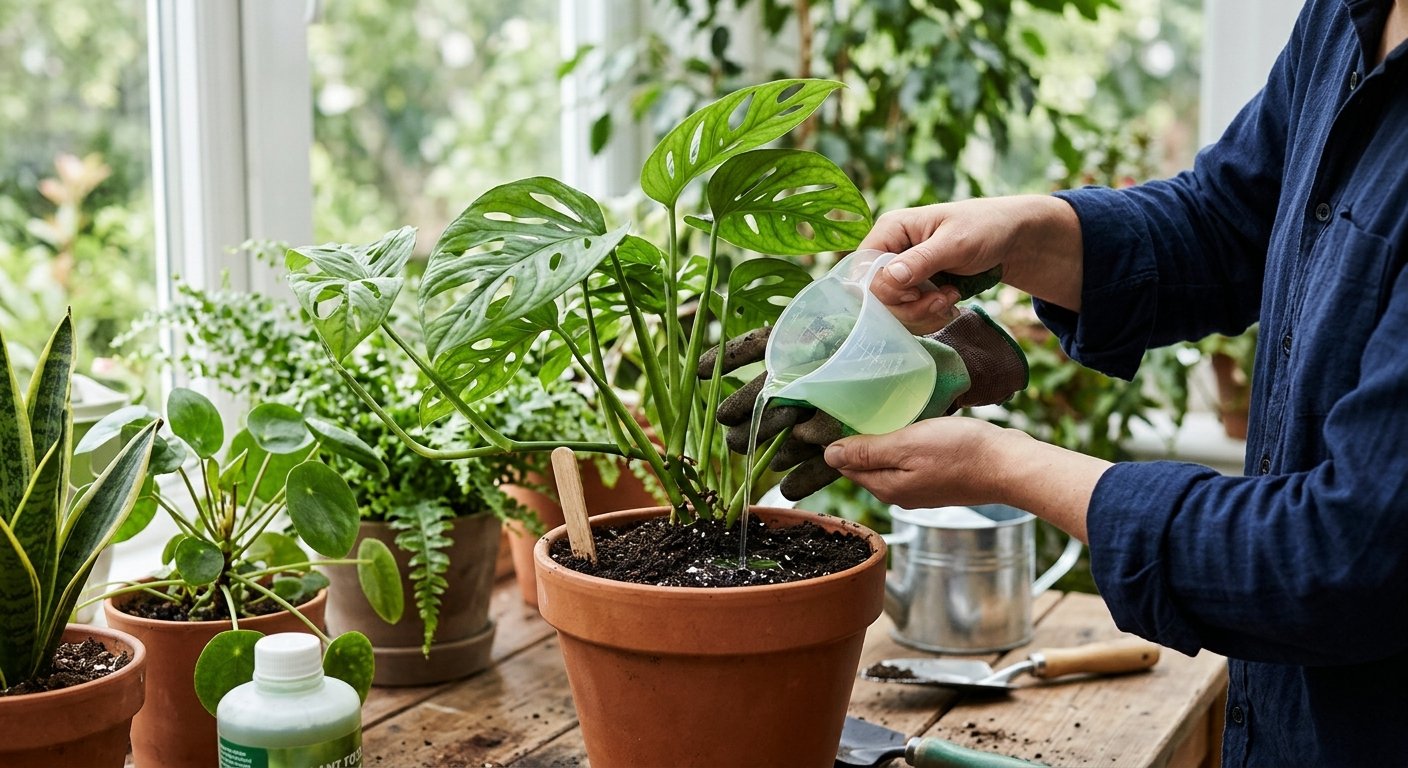
My neighbor Carol once almost destroyed her tomatoes by adding extra plant food every time she watered, which burned the roots and left a white crust on the soil. Many gardeners struggle to determine how much product is safe to apply while staring at rows of fertilizer bottles in store aisles. Feeding your garden effectively requires patience, restraint, and a clear understanding of what your foliage needs at each growth stage. Learning how to dose fertilizer for plants safely ensures you can feed your indoor and outdoor collection with total confidence without risking chemical burn.
Why Proper Fertilizer Dosage Matters
Fertilizer acts like medicine for your garden rather than traditional food. Giving a small amount at the correct time boosts growth and strengthens roots. However, applying too much concentrated product can sicken or even kill your greenery quickly.
When you over-feed, synthetic salts build up in the soil and draw moisture away from the root system. This process dehydrates the roots from the inside and causes severe chemical burns. On the other hand, starving your garden leads to pale leaves, stunted growth, and high vulnerability to common pests. Finding the perfect balance provides the exact energy required to build strong cell walls and produce bright blooms.
Decoding Fertilizer Labels (NPK Ratio)
Before opening any package, you must understand the three bold numbers printed on the front label. These numbers represent the N-P-K ratio, which shows the percentage of Nitrogen, Phosphorus, and Potassium contained inside the product.
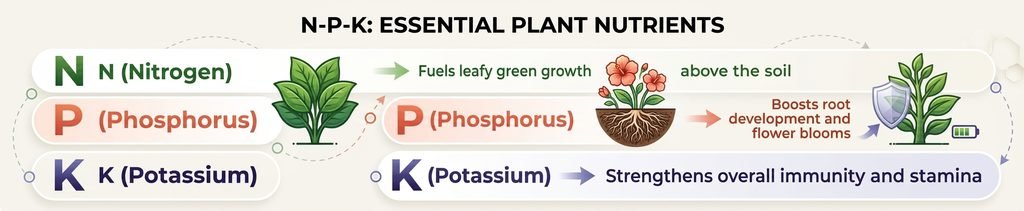
A label reading 10-10-10 provides equal parts of each major macronutrient to your soil. In contrast, a formula with a higher middle number, such as 5-10-5, encourages heavy blooming. Always read the main dilution instructions before applying concentrated or ready-to-use liquids to your pots.
Step-by-Step Guide: How to Dose Fertilizer Safely
Applying nutrients safely requires a simple, controlled process to protect delicate root systems from chemical shock.
- Drench the Soil First: Never apply concentrated liquid or dry granules directly to bone-dry soil. Thoroughly soak the pots with plain water a few hours before feeding to create a protective moisture buffer.
- Calculate the Math: Look closely at the packaging directions and scale the measurements down if necessary. If the label asks for 1 tablespoon per gallon of water, use 3/4 teaspoon for a single quart of water.
- Measure with Precision: Avoid guessing or using standard kitchen spoons that vary in volume. Use dedicated measuring spoons for powders or a calibrated dropper for liquids.
- Apply Evenly: Pour the diluted mix evenly around the base of the stem out to the outer edge of the leaf canopy. This guarantees that active feeder roots absorb the nutrients evenly.
Fertilizer Dosage Profiles by Plant Category
- Indoor Houseplants & Tropicals: Use a balanced liquid mix diluted to half or quarter strength. Feed them every 4 to 6 weeks during spring and summer, and stop completely during the cold winter months.
- Outdoor Garden Beds: Apply balanced liquid mixes or slow-release granules at the full label rate. Work granules gently into the topsoil every 4 to 6 weeks through the active growing period.
- Flowering Plants: Choose a high-phosphorus formula to encourage heavy flower production. Feed every 2 to 4 weeks while buds are actively setting and opening.
- Vegetables & Heavy Feeders: Tomatoes and corn require high nitrogen early in the season for strong stems. Switch to higher phosphorus mixes once blossoms appear to support high crop yields.
- Herbs & Delicate Greens: Herbs require a very light touch to maintain their essential oils and deep flavor profiles. Feed them only once or twice a season using a quarter-strength liquid solution.
- Trees & Woody Shrubs: Scatter slow-release granular fertilizer around the drip line once or twice a year. Always base the dosage rate on trunk diameter or total canopy coverage.
- Succulents & Cacti: Desert species are highly sensitive to harsh chemical salts in the soil. Feed them once or twice a year using a low-nitrogen, highly diluted specialty formula.
- Seedlings & Young Sprouts: Wait until young sprouts form their first set of true leaves before feeding. Dose them with a weak quarter-strength water-soluble mixture to protect fragile new roots.
Types of Fertilizers & How to Dose Each
| Fertilizer Type | Dosage Method | Application Frequency | Best Used For |
| Liquid Concentrates | Dilute with plain water using precise spoons or droppers | Every 2 to 4 weeks during growth | Indoor houseplants and fast-growing annuals |
| Dry Granules | Measure by weight or cup; sprinkle over topsoil and water in | Every 4 to 6 weeks | Outdoor garden beds and large vegetable plots |
| Slow-Release Spikes | Insert spikes midway between stem and pot rim based on pot size | Every 3 to 6 months | Busy gardeners and low-maintenance indoor pots |
| Organic Compost | Spread a 1-inch layer over soil or mix into potting media | 1 to 2 times per year | Improving overall soil structure and delicate plants |
Timing & Seasonal Schedule: When to Fertilize
- Spring & Summer (Active Growth): Warm weather and long daylight hours prompt rapid leaf expansion. Increase your feeding routine to match this active growing window.
- Autumn (Tapering Off): Growth naturally slows down as temperatures fall and days shorten. Reduce the frequency of feeding so tender growth is not damaged by frost.
- Winter (Dormancy Rest): Most plants enter a natural resting state during cold months. Stop applying nutrients entirely to prevent harsh salts from sitting in dormant soil.
Identifying & Fixing Dosing Issues
Over-fed plants show brown leaf edges, wilting stems despite damp soil, and a white salty crust on the topsoil. If you notice these symptoms, immediately flush the container with large amounts of plain water for several minutes to rinse out excess salts.
Under-fed plants display pale or yellowing leaves, thin stems, and slow growth during warm weather. To fix a nutrient deficiency, feed with a balanced liquid solution at half strength and monitor new growth over the following two weeks.
Conclusion
When caring for your garden, remember that less nutrient application is always safer than too much. It is easy to nourish a slightly under-fed plant, but repairing severe chemical root burn takes months of recovery. Follow label instructions, measure accurately with good tools, and adjust your routine according to seasonal growth changes.
FAQS
How often should I feed my indoor collection?
Dose indoor tropicals every 4 to 6 weeks during spring and summer using a half-strength liquid formula. Stop feeding altogether during winter to avoid salt accumulation in the soil.
What happens if I apply product to dry soil?
Applying chemical fertilizer directly to dry soil causes immediate root burn and dehydrates the plant. Always moisten the soil with plain water first to protect sensitive roots.
Is organic fertilizer safer than chemical formulas?
Organic options like compost and worm castings release nutrients slowly and are very gentle on roots. Chemical options work much faster but carry a higher risk of burning if measured incorrectly.
How do I measure proper doses for fragile seedlings?
Wait for true leaves to appear, then mix a water-soluble feed at quarter-strength. This gives young roots gentle support without scorching delicate new tissue.