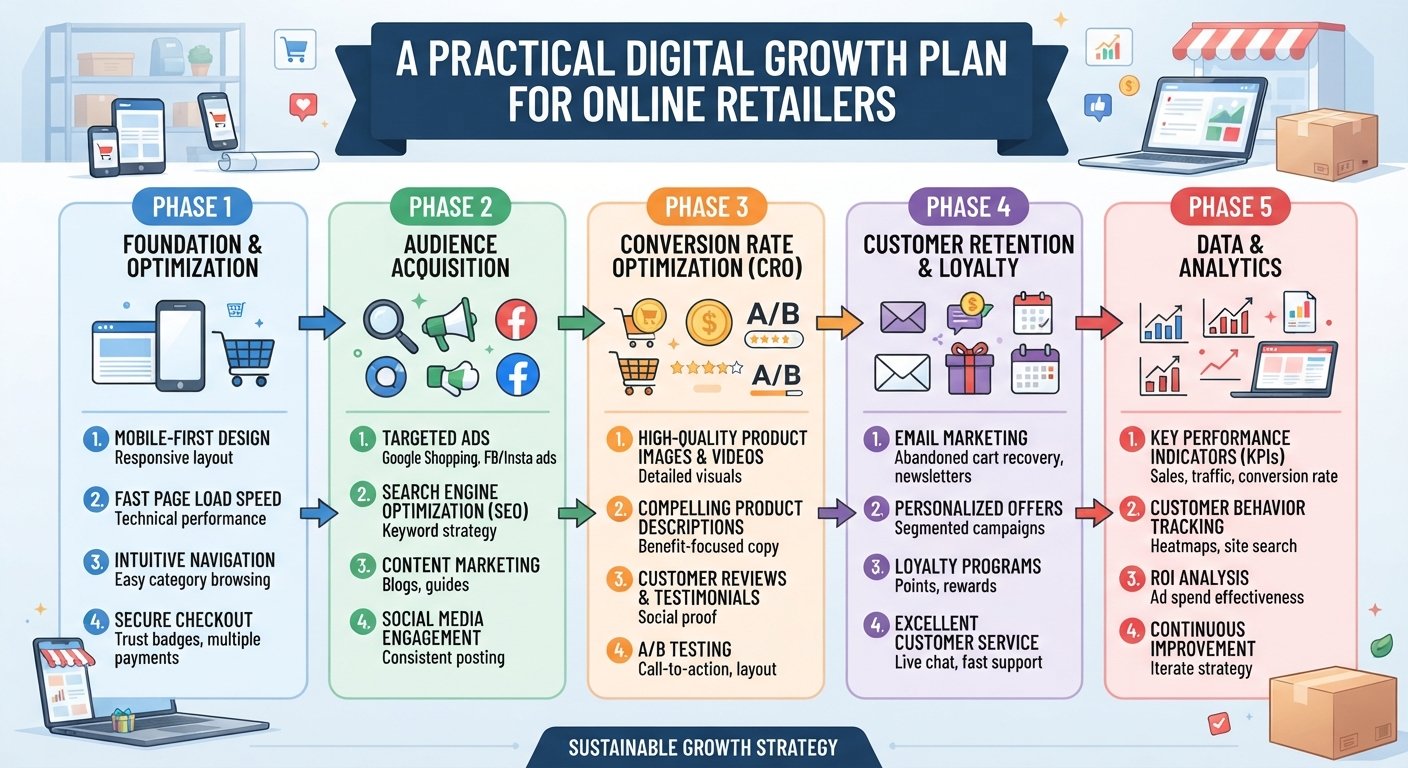
Running an online store involves more than choosing products and keeping the checkout working. Retailers also need useful content, trustworthy customer information, and a steady way to reach people who may not yet know the brand. Those jobs compete for time: a small team may be managing product pages, customer questions, search visibility, and social channels at once. A practical growth plan connects these tasks instead of treating each as a separate campaign. It starts with a clear audience, prioritizes work that helps shoppers make decisions, and uses outside support only where it fills a real gap.
Start With the Shopper’s Questions
Good retail content answers questions people have before, during, and after a purchase. A store selling home office equipment, for example, might explain how to compare monitor sizes, choose a desk for a small room, or care for a mechanical keyboard. These topics can bring in readers earlier than a product listing alone, while helping the business demonstrate practical knowledge.
Before commissioning articles or investing in promotion, review customer service messages, product reviews, and search queries. Repeated questions often reveal the most useful topics. Organize them by stage: discovery, comparison, purchase, and post-purchase support. This gives the content plan a purpose beyond publishing on a schedule.
- Discovery: Explain common problems and introduce the relevant product category.
- Comparison: Clarify differences among materials, features, sizes, or price points.
- Purchase: Address shipping, returns, compatibility, warranties, and other decision factors.
- After purchase: Offer setup instructions, maintenance advice, and troubleshooting guidance.
Make Product Pages Worth Finding
External promotion works best when it leads to a useful destination. A product page should be accurate, easy to scan, and clear about what is included. Use original descriptions rather than copying a manufacturer’s specifications wholesale. Explain who the product suits, what limitations it has, and how it compares with alternatives in the store. Clear photography, accessible sizing or compatibility details, and visible delivery and return information can reduce uncertainty.
Retailers should also make sure the technical basics are in place. Pages need to load reliably on mobile, important product information should be available to search engines, and category pages should help people navigate related items. Monitor broken links, unavailable products, and duplicate descriptions as inventory changes. These improvements are not glamorous, but they make every later marketing effort more likely to be useful.
Use Relevant Editorial Outreach, Not Bulk Placements
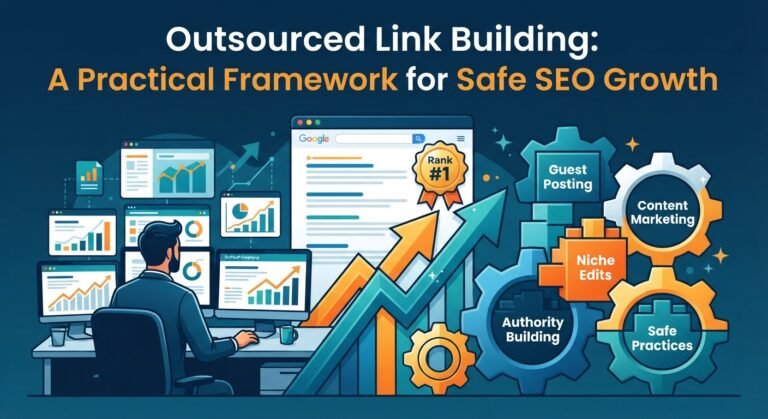
Publishing an article on another website can introduce a store to readers already interested in a related subject. The value depends on fit and substance: a cycling retailer might contribute a maintenance guide to a cycling publication, while a kitchenware brand could offer a practical piece about choosing cookware. An unrelated placement or thin article written mainly to contain a link is unlikely to build meaningful trust.
Retail teams researching potential publishers can browse shopping guest-posting sites as one way to identify blogs covering shopping and retail. Treat any directory as a starting point, not an automatic endorsement. Check the publication’s recent articles, audience, editorial standards, and whether the proposed subject belongs there. A placement should make sense to readers even if they never click through to the store.
Questions to Ask Before Pitching
- Does the site publish useful, current material for the audience the store wants to reach?
- Can the retailer contribute original expertise, data, or examples rather than a generic product pitch?
- Would the article still be worth reading if the brand mention were removed?
- Is the destination page relevant to the article and ready to answer visitors’ questions?
- Are the publication’s policies and link practices clear?
Bring in Freelancers for Defined Work
Outside specialists can help with product photography, copy editing, technical fixes, design, or a batch of customer guides. The key is to define the deliverable before hiring. “Improve our marketing” is too broad to evaluate; “edit five product guides for accuracy and consistency, with one revision round” gives both sides a clearer target.
Businesses weighing freelance platforms can compare how work is scoped, priced, and paid. For example, Osdire’s platform comparison discusses an alternative oriented around fixed-scope services. Osdire operates across a broad range of service categories, so buyers should still check that a freelancer’s experience matches the task. As with any marketplace, review examples, agree on milestones, and clarify what counts as completion before work begins.
A Simple Hiring Brief
- State the outcome: Describe the business problem and the audience the work serves.
- List the deliverables: Specify formats, quantities, deadlines, and any required source files.
- Set boundaries: Share brand guidance, factual requirements, access limits, and what is out of scope.
- Agree on review: Define how feedback will be collected and how many revisions are included.
- Check the result: Verify accuracy, usability, and fit before approving the completed work.
Measure What Helps the Business
Traffic alone does not show whether a retail content effort is working. Track outcomes that match the purpose of each activity. A buying guide might be assessed through engaged visits, visits to relevant product pages, and assisted sales. A freelancer’s work can be reviewed against the agreed brief, while an external article can be evaluated for relevance, referral visits, and the quality of the audience it attracts.
Give campaigns enough time to produce useful evidence, but do not keep repeating an approach that consistently misses its goal. Review results monthly or quarterly, note what readers respond to, and update older material when products or policies change. Sustainable digital growth comes from a series of sound decisions: useful information, relevant distribution, clear work agreements, and honest measurement.
Final Takeaway
Online retailers do not need to pursue every channel at once. They can build a stronger foundation by answering shopper questions, improving the pages that receive attention, and choosing outside publishers or freelancers carefully. When each article, placement, or contracted task has a defined reader benefit and a measurable purpose, marketing becomes easier to manage—and more likely to earn lasting trust.
For more helpful tips, ideas, and information, visit techcrusader.